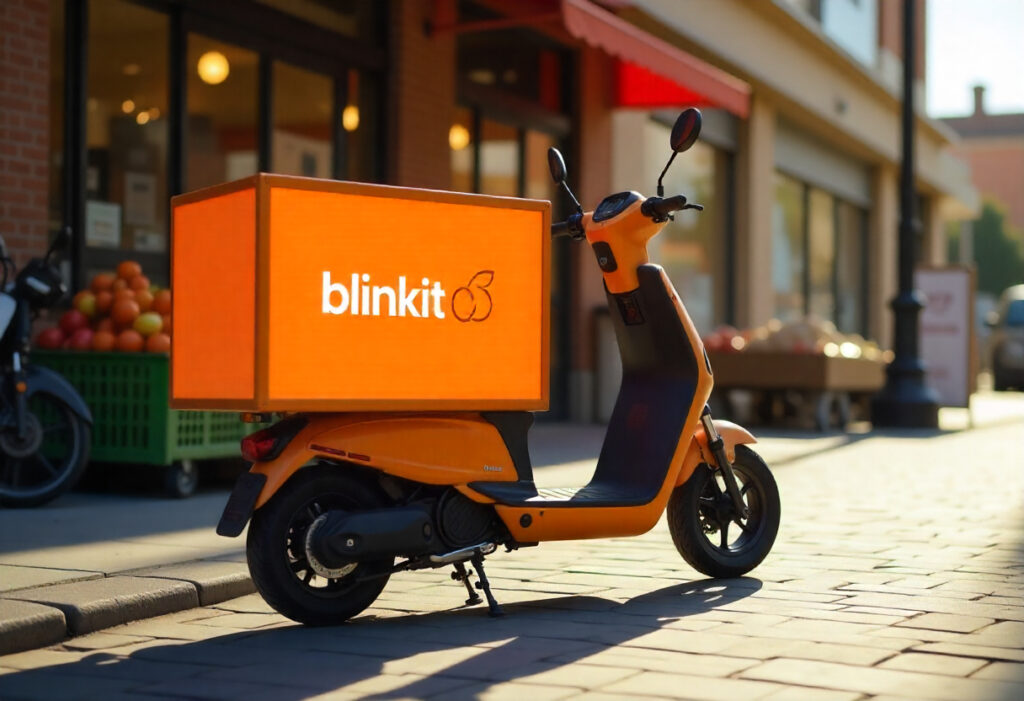
In the Indian eCommerce landscape, Blinkit has become a prominent name in quick commerce, redefining how urban consumers shop for groceries and essentials. Formerly known as Grofers, Blinkit’s transformation into a hyperlocal, real-time delivery powerhouse is a lesson on how to combine app UX, backend integration, and location-based services to reduce cart abandonment and boost conversions.
This article examines Blinkit’s strategic use of technology and design to dominate the quick commerce sector.
The transformation from Grofers to Blinkit marked a pivotal moment in India’s e-commerce evolution. What began as a scheduled grocery delivery service evolved into a lightning-fast, hyperlocal fulfilment platform. This shift wasn’t merely a rebranding exercise; it was a complete overhaul of Blinkit’s business model, technology stack, and customer experience philosophy.
Grofers operated in a space dominated by traditional e-commerce logistics, where deliveries were scheduled hours or even days in advance. While this model worked for planned purchases, it failed to address the growing consumer demand for instant gratification, especially in urban centres where convenience often trumps price.

Source – India Today
The rise of quick commerce in India, fuelled by changing lifestyles, increased smartphone penetration, and the success of food delivery apps like Swiggy and Zomato, created a new opportunity. Consumers wanted groceries and essentials delivered not in hours, but in minutes. Grofers recognized this shift and responded with a bold pivot.
Also Read: How EaseMyTrip Gained Market Share with SEO-heavy Content & Local Partnerships
The name Blinkit was chosen to reflect speed, simplicity, and immediacy. It signalled a break from the past and a commitment to delivering groceries “in the blink of an eye.” But the rebranding went far beyond a new logo or tagline; it involved rethinking every aspect of the business.
To fulfil the promise of 10-minute deliveries, Blinkit had to redesign its entire supply chain. This included setting up dark stores, small, strategically located warehouses stocked with high-demand items. These stores were placed within 2–3 km of high-density residential areas to ensure rapid fulfilment.
The company also invested heavily in real-time inventory systems, location-based services, and backend integration to support the new model. Every aspect of the user experience, from app design to delivery logistics, was optimized for speed and reliability.
Blinkit’s app underwent a complete redesign to support the new quick commerce model. Features like auto-location detection, instant checkout flows, and smart cart nudges were introduced to reduce friction and encourage impulse purchases. The goal was to make ordering groceries as fast and intuitive as ordering food.
This pivot positioned Blinkit at the forefront of the quick commerce strategy in India, catering to time-starved urban professionals who value convenience over cost. By aligning its brand, operations, and technology with emerging consumer behaviours, Blinkit not only survived the shift, but it thrived.

Source – Product Monk
At the heart of Blinkit’s rapid rise in the quick commerce space lies its robust hyperlocal delivery model. Unlike traditional eCommerce platforms that rely on centralized warehouses and long-haul logistics, Blinkit has built a decentralized, neighbourhood-centric infrastructure that enables it to deliver groceries and essentials in under 10 minutes. This model is not only innovative but also highly efficient, setting a new benchmark for location-based delivery apps in India.
Hyperlocal delivery refers to the fulfilment of orders from nearby distribution points, typically within a few kilometres of the customer’s location. This model minimizes travel time, reduces operational costs, and enhances customer satisfaction by ensuring faster deliveries.
Blinkit has perfected this model by deploying a dense network of dark stores, small, tech-enabled warehouses that are not open to the public but serve as micro-fulfilment centres.
Blinkit operates over 451 dark stores across 27 cities, each strategically placed within 2–3 kilometres of high-demand residential areas. These stores are stocked with high-frequency items, including milk, bread, snacks, vegetables, and personal care products. The inventory is curated based on local consumption patterns, ensuring that the most in-demand items are always available.
To ensure timely deliveries, Blinkit uses a combination of Google Maps APIs and proprietary geospatial algorithms. These systems calculate the most efficient delivery routes in real-time, taking into account traffic conditions, road closures, and rider availability. This level of optimization is crucial for meeting the 10-minute delivery promise.
Blinkit’s backend is powered by in-memory databases like Redis, which allow for real-time inventory updates. This ensures that the app only displays items that are actually in stock at the nearest dark store. It also prevents order cancellations due to stockouts, enhancing customer trust and satisfaction.
The hyperlocal model is particularly well-suited for quick commerce in India, where urban density, traffic congestion, and consumer expectations demand ultra-fast service. By decentralizing inventory and leveraging real-time data, Blinkit can fulfil orders faster than traditional e-commerce players.
a. Speed: Orders are picked, packed, and dispatched within minutes.
b. Accuracy: Real-time inventory reduces errors and cancellations.
c. Scalability: Modular dark store setup allows rapid expansion into new areas.
d. Cost Efficiency: Shorter delivery distances reduce fuel and labour costs.
e. Customer Delight: Faster deliveries lead to higher satisfaction and repeat usage.
Blinkit’s hyperlocal infrastructure has become a blueprint for other location-based delivery apps. Its ability to combine physical infrastructure with digital intelligence has redefined what’s possible in urban logistics. As more players enter the quick commerce space, Blinkit’s early investment in hyperlocal tech continues to give it a competitive edge.
In the world of quick commerce, speed isn’t just about delivery; it’s about how fast users can find, select, and purchase what they need. Blinkit understands this deeply. Its app is not just a storefront; it’s a finely tuned engine designed to deliver instant gratification. Every element of the user experience (UX) is crafted to reduce friction, encourage impulse buying, and minimize cart abandonment, core goals in real-time UX in eCommerce.
In a hyper-competitive market where users can switch apps in seconds, the difference between a completed order and an abandoned cart often comes down to milliseconds. Blinkit’s UX strategy is built around this insight. The app is engineered to be intuitive, responsive, and personalized, ensuring that users can go from browsing to checkout in under a minute.
The moment a user opens the app, Blinkit uses GPS-based location detection to identify the nearest dark store. This ensures that users only see items that are available for delivery in their area. It eliminates the frustration of browsing unavailable products and sets the stage for a seamless shopping experience.
Blinkit keeps onboarding simple, just a phone number and address. No lengthy forms, no unnecessary steps. This minimalist approach reduces drop-offs during sign-up and gets users to the product catalog faster.
To increase the average order value and reduce delivery costs, Blinkit uses smart nudges, such as “Add ₹50 more for free delivery” or “Buy 1 more to unlock a discount.” These prompts are subtle yet effective, encouraging users to add more items without feeling pressured.
For frequently purchased items like milk, bread, or eggs, Blinkit offers one-click reordering. This feature saves time and builds habit loops, making it easier for users to rely on Blinkit for daily essentials.
When an item is out of stock, Blinkit doesn’t just show an error. Instead, it uses AI to suggest similar alternatives based on user preferences and past behaviour. This keeps the order flow uninterrupted and reduces the chances of cart abandonment.
Blinkit’s UI is clean, colourful, and clutter-free. Categories are clearly labelled, search is lightning-fast, and product images are optimized for quick scanning. The checkout process is streamlined with saved addresses, preferred payment methods, and real-time delivery estimates.
Small touches, such as animated loaders, delivery countdowns, and real-time order tracking, enhance the sense of speed and reliability. These micro-interactions build trust and keep users engaged during the short wait for their delivery.
Blinkit’s real-time UX is a key pillar of its quick commerce strategy. By focusing on speed, simplicity, and personalization, the app turns casual browsers into loyal customers. It’s a textbook example of how real-time UX in eCommerce can drive growth, reduce churn, and create a competitive edge.
Also Read: Trust, Tech, & Transformation in Web and Mobile App Development: Urban Company’s Secret to Success
Blinkit’s backend is a testament to modern engineering principles, built on a robust microservices architecture that ensures scalability, modularity, and resilience. Each core function, inventory management, payment processing, and delivery logistics, is encapsulated in its own service, allowing independent scaling and updates without affecting the entire system. This design is crucial for quick commerce platforms, where uptime and responsiveness directly impact customer satisfaction.
The tech stack powering Blinkit reflects a thoughtful blend of performance and flexibility:
1. Backend technologies: Java with Spring Boot for enterprise-grade reliability, Node.js for lightweight asynchronous operations, and Python with Django for rapid development and data-centric services.
2. Front-end frameworks, such as React and React Native, ensure a seamless experience across web and mobile platforms, while Redux manages complex state transitions efficiently.
3. Databases: PostgreSQL handles structured data with transactional integrity, MongoDB supports flexible document storage, and Redis enables lightning-fast caching and session management.
4. DevOps tools: Kubernetes orchestrates containerized services, Docker simplifies deployment, and cloud platforms like AWS and GCP provide scalable infrastructure.
5. Real-time processing: Kafka and RabbitMQ facilitate event-driven communication, enabling real-time updates for inventory changes, order tracking, and user notifications.
This architecture ensures high availability, fault tolerance, and real-time responsiveness, all of which are critical for Blinkit’s promise of ultra-fast deliveries.
Blinkit’s use of location intelligence goes far beyond basic GPS tracking. It’s about delivering contextual relevance and operational efficiency. By leveraging advanced geospatial data, Blinkit enhances both the user experience and backend logistics.
These capabilities allow Blinkit to personalize the user experience while maintaining operational efficiency, setting it apart from other location-based delivery apps.
User acquisition is only the beginning. Blinkit focuses heavily on retention, using gamification and personalized incentives to keep users coming back. These strategies foster habit formation and emotional engagement, turning occasional users into loyal customers.
Together, these tactics create habit loops that drive repeat usage and deepen brand loyalty.
Blinkit’s marketing strategy is an extension of its product experience, fast, witty, and hyperlocal. It’s designed to resonate with the everyday lives of its users, often blending humour with utility.
Innovative marketing approaches include:
This synergy between user experience and marketing amplifies Blinkit’s brand presence, making it not just a utility but a part of users’ daily lives.
Blinkit’s meteoric rise in India’s quick commerce space is no accident; it’s the result of a carefully orchestrated growth strategy that blends operational efficiency, technological innovation, and strategic partnerships. Rather than chasing scale blindly, Blinkit has focused on scaling smartly, ensuring that every expansion move is backed by data, infrastructure, and user demand.
One of the most pivotal moments in Blinkit’s journey was its acquisition by Zomato. This partnership didn’t just bring financial backing; it unlocked synergies in logistics, customer base, and technology. Zomato’s deep expertise in food delivery helped Blinkit refine its last-mile operations, while shared data pools enabled better personalization and targeting.
Blinkit also made a bold move by expanding into Tier-2 cities, a market often overlooked by quick commerce players. Instead of replicating urban models, Blinkit localized its approach by setting up dark stores tailored to regional demand patterns. These fulfilment centres are optimized for speed and stocked with products that reflect local preferences, ensuring relevance and efficiency.
Another key growth lever has been Blinkit’s diversified product mix. While groceries remain the core offering, the platform has expanded into personal care, electronics, and daily essentials, increasing average order value and frequency. This diversification not only meets more user needs but also helps balance inventory turnover and margins.
To optimize profitability and user satisfaction, Blinkit employs dynamic pricing. Prices fluctuate based on demand, delivery windows, and inventory levels. For example, users may receive discounts for choosing off-peak delivery slots, helping Blinkit manage rider load and reduce operational stress.
These strategic moves have paid off handsomely. Blinkit now commands 46% of India’s quick commerce market, outpacing competitors like Zepto, Swiggy Instamart, and BigBasket. Its success is a blueprint for startups aiming to scale sustainably in high-pressure environments.
Blinkit’s journey offers valuable insights for app developers and logistics platforms looking to build scalable, user-centric solutions:
Blinkit’s dominance in quick commerce stems from its ability to blend real-time user experience with hyperlocal technology. By building a responsive backend, leveraging location intelligence, and personalizing every touchpoint, Blinkit has created a platform that feels fast, relevant, and reliable. Its strategic expansion, diversified offerings, and gamified retention tactics further reinforce its market leadership. For startups and tech platforms, Blinkit’s journey is a masterclass in scaling smartly, where technology, user experience, and operational precision converge to create lasting impact.

 August 19, 2025
 October 18, 2018
 October 27, 2018
 November 9, 2018
 December 12, 2018
 January 12, 2019
