Amul is one of the most respected and best brands in India. The Amul milk cooperative business started in Gujarat, India, at the end of 1946. Today even after 75 years, it’s unique marketing strategy continues to engage and amuse Indian consumers. Thus, it is worth studying the marketing strategy of Amul and seeking inspiration.
AMUL is derived from – Anand Milk Union Limited. Dr. Verghese Kurein started it in 1946. Dr. Verghese is also popularly known as the Milkman of India. The unique thing about Amul is that it is not a privately owned or public company. It is instead a cooperative society that started to provide justice to farmers in 1946.
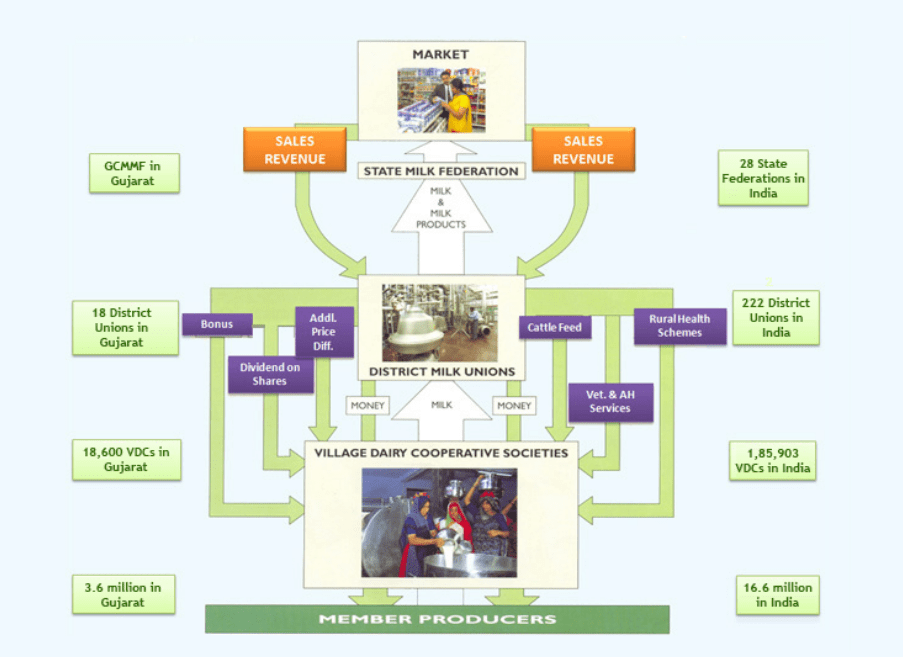
Amul has five pillars in its business model. It is, therefore, a company “for the people.” There is no single owner of Amul as all villagers manage Amul Cooperative society. Here are the five pillars of the Amul business model.
The profit share of Amul products is distributed as shown in the chart below:
Amul makes use of the umbrella marketing strategy. The marketing strategies are always on point with the Amul girl campaigns and constant marketing efforts. The next aspect of Amul’s marketing strategy is the product portfolio. Amul also offers the broadest range of dairy products, including ghee, butter, milk, chocolate, cheese, sweets, milk powder, ice cream, yogurt, buttermilk, and bread spreads. The quality, and the taste of Amul’s eatables, are unparalleled. The variety of Amul’s products caters to a more significant audience segment.
On the other hand, Amul secured its standing in the overall dairy market. The primary target audience was the economic class and the middle class. The simple reason behind the brand’s retention of customers is the product pricing of Amul.
The main USP of the Amul brand is its low pricing. It hits the transnationals by reducing the prices on its product portfolio. The competitive advantage is its “backward integration strategy,” which helps substantially in cost reduction. In addition, Amul enjoys the reputation of being an affordable dairy brand in the country. While the rates offered by its peers have fluctuated massively with time, Amul has managed to keep its prices in line with people’s expectations. Thus, this has made Amul a trusted choice for dairy products.
Amul has gained popularity all over the country with its massive and well-managed distribution channel. Amul products also enjoy a pan-India distribution. The brand manages this through the two channels of acquisition and distribution. Amul also has its showrooms, eCommercestores, and omnichannel retail. Despite its robust marketing and distribution strategies, Amul launched a range of new products in 2021, despite the COVID-19 pandemic.
We are all aware of Amul’s tagline- ‘The taste of India.’ The slogan banished the popular notion that bread and butter were the staple of only the British and pulled in nationalism.
Its mascot, the never-aging ‘Amul Girl,’ with blue hair and an orange face, who wore a polka-dotted dress, was the company’s icon. Amul marketed all its products range under a single name. Therefore, it helps the brand club its marketing and advertising costs within just 1% of the revenue.
The Amul Girl’s first advertisement portrayed the popular Amul product – Amul Butter, with the slogan ‘Utterly Butterly Delicious.’ This was a total hit! An interesting story behind this is – The Amul girl was created in response to Amul’s rival brand Polson’s butter- girl. The Amul girl has been the symbolic face of Amul since 1966 and is today considered the longest-running advertising campaign.

Amul has been using a moment marketing strategy for so many decades now. Previously, it was used in newspapers, and now it is on popular social media platforms too. Moment marketing is using current events and trends to initiate relevant customer conversations. It also helps brands establish a common ground with their customers and relate to them.
Moment-based marketing is often spontaneous, humorous, engaging, relatable, and relevant to current events. Amul is way ahead in moment marketing since it started running topical advertisements in 1966. It is the longest-running outdoor advertisement in the world. Amul has been creative and witty with the day’s headlines and has used its iconic “utterly butterly girl” to keep its brand relevant.
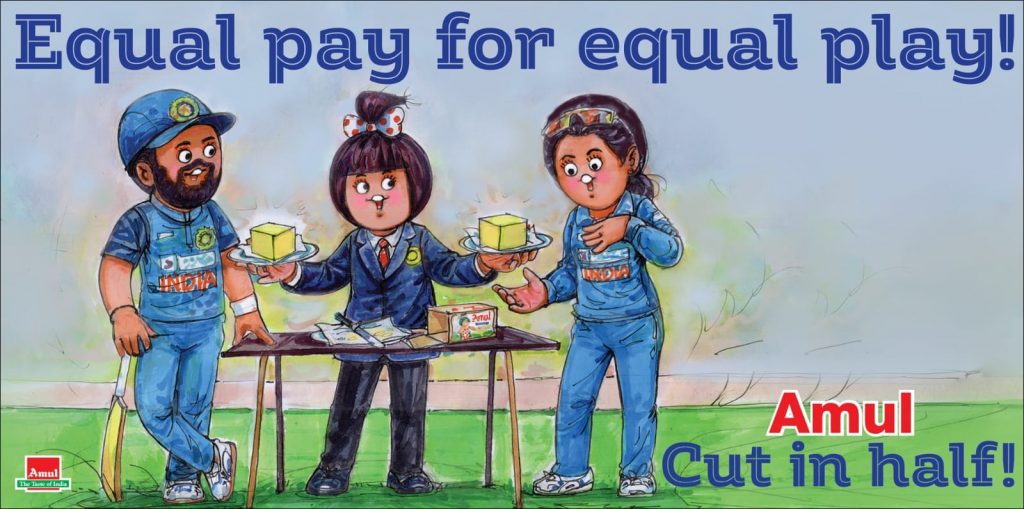
As you can see, Amul has used this crucial news of equal pay for both men & women cricketers. See how smartly the brand used this piece of news for its marketing purpose. This is the innovative and stand-out marketing strategy of Amul.
Digital marketing is much cheaper than traditional marketing. Amul sees this opportunity, and its profit margins have increased tremendously after going digital. Let’s understand the digital marketing strategy of Amul in detail.
Amul follows an intelligent SEO strategy. According to SEMrush, their website gets more than 960,000 visitors per month. Most of its traffic comes from branded queries. As you can see, the domain authority of the Amul website is 59. Whenever Amul publishes a new page, it quickly gets ranked on Google due to its high authority. This is a good marketing strategy of Amul to capture the right audience from Google.

Amul’s social media marketing strategies also employ several social media strategies to keep up with the evolving social landscape and interact with audiences in real-time. Let’s briefly look at Amul’s Instagram, Facebook, Twitter, and YouTube marketing:
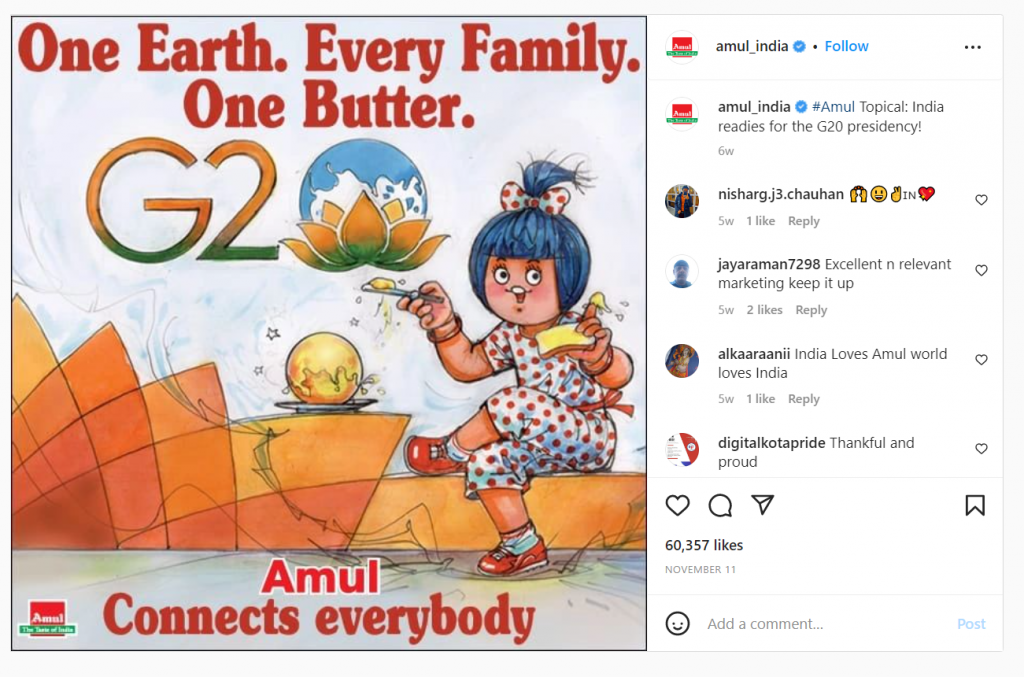
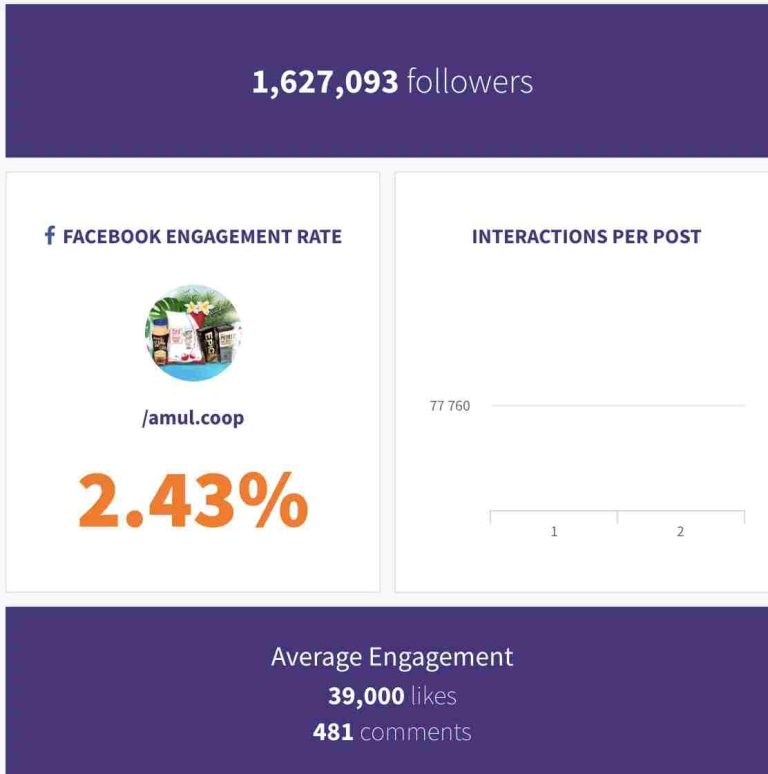
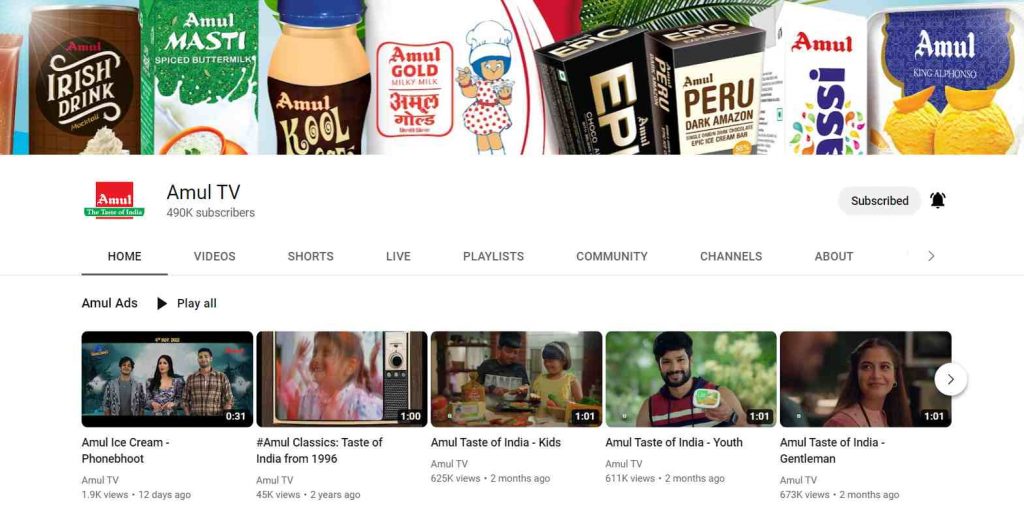
There is no denying the fact that Amul’s marketing strategy has got something for everyone. Here is a look at how Amul has worked through different strategies to become a billion-dollar brand.
Customer-based segmentation – Kids – Amul chocolates, Amul butter, Amul Kool drinks, Amul Lite Butter, Regular cheese, Amul Pizza Cheese, Cheese spreads, Amul Milk Powder, and Nutra Amul.
Industry-based segmentation – Milk – Ice cream manufacturers, restaurants/food chains, coffee shop chains, Butter, cheese, ghee – for Indian households, Bakeries and confectionaries, street vendors, and snack shops.
Amul has also established its image by being a readily available and affordable product, surpassing the quality of other brands. Thus, it targets the entire demographic under its product umbrella.
What is it that comes first in mind when you say butter? It is Amul butter. It has successfully positioned itself as the first choice of the national butter consumer, and sometimes it is the only choice. The campaigns like the “Taste of India” added an emotional quotient to the marketing, and it vouches for itself as a trusted family product in every household.
Amul’s Tast of India Campaign on YouTube: https://bit.ly/3vgSgyC
Established in 1946, Amul’s marketing strategy has the competitive advantage of being the oldest Indian milk brand. Therefore, it has two main advantages.
Amul has come a long way by adapting consumer-friendly strategies and becoming a household name in India. However, any business must rely on strong marketing strategies. Amul has always dominated the market by implementing essential and critical marketing strategies like low-cost pricing, digital marketing, quality products, etc.
Shyam Future Tech continues to decode the marketing strategies of famous brands that you can learn from. To find your right branding and marketing partner, visit www.shyamfuture.com today!


 August 19, 2025
 October 18, 2018
 October 27, 2018
 November 9, 2018
 December 12, 2018
 January 12, 2019
