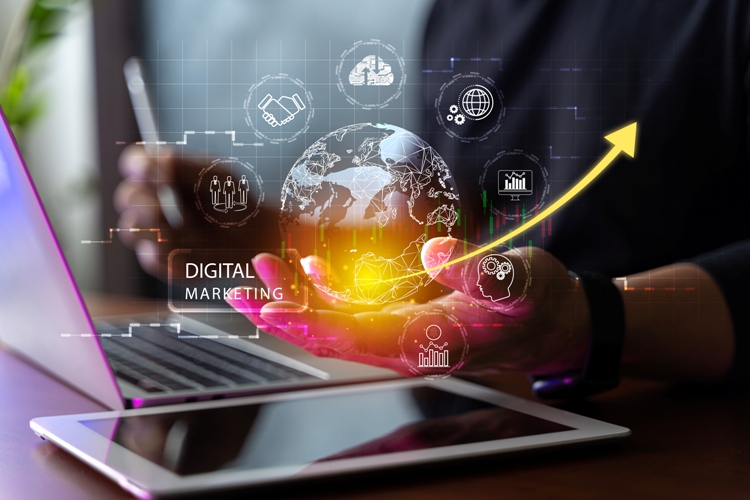
India is undergoing a digital revolution. From UPI payments and e-governance to AI startups and 5G rollouts, the country is rapidly digitizing its economy and society. Yet, amid this transformation, one critical component remains underutilized: Data-Driven Digital Marketing. While businesses are investing in digital infrastructure, many still rely on outdated marketing tactics that fail to leverage data effectively. This gap is not just a missed opportunity; it’s a bottleneck in India’s digital growth story.
Digital marketing has traditionally been dominated by large enterprises with substantial budgets and resources. However, recent technological advancements and the proliferation of accessible digital tools have democratized the marketing landscape, enabling smaller businesses to compete on a more level playing field. In this article, we’ll explore why Data-Driven Digital Marketing is the missing link in India’s digital transformation, how data-driven marketing strategies can revolutionize business outcomes, and why now is the time to act.
In an era shaped by the rapid technological advancements and shifting global dynamics, digital transformation has become more than just an aspiration; it is an imperative for businesses seeking sustained growth and competitiveness. India’s journey toward Industry 4.0 excellence is a testament to the power of technological innovation, strategic collaboration, and a forward-thinking approach to technology adoption. India’s digital economy is booming:
Yet, despite this progress, many businesses still struggle to convert digital presence into measurable growth. Why? Because they’re not leveraging the most valuable asset of the digital age: data.
Data-Driven Digital Marketing is the very practice of using customer data, analytics, and insights to guide marketing decisions. Instead of relying on intuition or generic campaigns, businesses use real-time data to:
It’s not just about collecting data; it’s about transforming that data into actionable strategies that drive ROI.
Also Read: Web Development Project Checklist: 12 Steps to Success
Traditional marketing in India often relies on:
These methods are expensive, inefficient, and lack the precision needed in today’s hyper-competitive digital environment. In contrast, data-driven marketing strategies offer:
Digital Marketing Analytics has emerged as a cornerstone of India’s digital transformation, enabling businesses to move beyond guesswork and embrace precision-driven strategies. As digital interactions multiply across websites, social media, mobile apps, and e-commerce platforms, marketers now have access to vast amounts of data that reveal customer behavior, preferences, and engagement patterns. This data, when analyzed effectively, empowers businesses to optimize campaigns, personalize experiences, and predict future trends with remarkable accuracy.
Tools like Google Analytics, Meta Business Suite, and CRM platforms have become essential for tracking key performance indicators, including conversion rates, customer lifetime value, and cross-channel attribution. The rise of analytics has also fostered a data-driven culture in which all decisions are based on evidence every time rather than intuition, resulting in improved ROI and agile marketing operations. In the context of digital transformation in India, Digital Marketing Analytics stands tall as a tool; it’s a strategic asset that helps businesses scale, adapt, and thrive in a highly competitive digital marketplace.

Source: Freepik
India’s marketers are increasingly adopting tools like:
These platforms empower businesses to turn raw data into actionable intelligence.
India’s digital economy is evolving at breakneck speed, fueled by widespread internet access, mobile penetration, and government-led initiatives. As part of India’s broader digital transformation, digital marketing has emerged as a cornerstone for diverse businesses seeking to connect with consumers in a hyper-connected world.
This surge in digital activity has created fertile ground for marketers to reach diverse audiences with precision and scale.
Traditional advertising is giving way to performance marketing, where ROI, engagement, and conversions are tracked in real time. Businesses are increasingly investing in:
These channels allow for granular targeting based on demographics, interests, and behavior—making marketing more efficient and measurable.
As part of the digital transformation in India, companies are embracing data-driven digital marketing to:
Tools like Google Analytics, Meta Business Suite, and CRM platforms are now standard in marketing departments across industries.
India’s e-commerce market is estimated to reach $200 billion by 2027, driven by:
Digital marketing plays a pivotal role in customer acquisition, retargeting, and lifecycle engagement for these businesses.
Video content is king in India’s digital landscape:
In the context of digital transformation in India, analytics is not just a marketing tool—it’s a strategic asset. It enables:
As businesses compete in this highly digital marketplace, those who master analytics will lead the charge.
Also Read: AEO Unplugged: The Blueprint for Using AEO in Digital Marketing
In a marketplace defined by rapid change, fierce competition, and hyper-personalized consumer expectations, traditional marketing methods are no longer sufficient. Businesses must evolve—and the most effective way to do so is by embracing data-driven digital marketing. This approach isn’t just a trend; it’s a strategic imperative for growth, relevance, and resilience.
Data-driven marketing eliminates the guesswork. Instead of relying on assumptions or generic messaging, businesses can always use real-time data to understand customer behavior, preferences, and intent. This leads to:
Every decision is backed by evidence, ensuring maximum impact and minimal waste.
Unlike traditional marketing, data-driven strategies offer full transparency into performance. Businesses can track:
This enables continuous optimization and ensures that every rupee spent contributes to measurable growth.
With tools like CRM platforms, analytics dashboards, and AI-powered segmentation, businesses gain deep insights into:
These insights help tailor experiences that resonate with customers, increasing loyalty and retention.
Markets shift, trends evolve, and consumer behavior changes rapidly. Data-driven digital marketing allows businesses to:
This agility is crucial in India’s dynamic digital landscape, where speed and relevance determine success.
As part of the broader digital transformation in India, businesses are digitizing operations, customer service, and supply chains. Marketing must follow suit. Data-driven strategies integrate seamlessly with digital ecosystems, enabling:
Choosing anything less risks creating disconnects that hinder transformation.
In a crowded market, differentiation is key. Businesses that leverage data can:
This gives them a strategic edge over competitors still relying on outdated methods.
In short, data-driven digital marketing is not just an option; it’s the only viable path forward for businesses that want to thrive in today’s digital-first economy. It empowers organizations to be smarter, faster, and more customer-centric.

Source: Freepik
With an increasing internet penetration in Tier 2 and Tier 3 cities, businesses can no longer afford to ignore these markets. Data-driven tools help:
India’s 63 million MSMEs are the backbone of the economy. Yet, many lack access to sophisticated marketing tools. Data-driven platforms democratize access by offering:
Today’s consumers expect personalized, seamless experiences. Data-driven marketing enables:
According to a 2025 report, companies using data-driven marketing in India saw:
These metrics are game-changers for businesses navigating India’s competitive digital landscape.
Also Read: How Spotify Used Data-Driven Campaign & Regional Curation to Expand in India
To implement effective data-driven marketing strategies, businesses need to focus on:
Despite the benefits, several barriers remain:
Overcoming all these challenges requires a combination of technology, training, and trusted partners.
India’s digital transformation is one of the most ambitious and dynamic journeys in the world today. From rural connectivity to fin-tech innovation, the nation is embracing technology at every level. Yet, for businesses to truly thrive in this evolving landscape, digital presence alone is not enough; they must harness the power of data-driven digital marketing to convert visibility into value.
By leveraging data-driven marketing strategies, companies can better understand their customers, personalize experiences, optimize campaigns, and drive measurable growth. This approach not only enhances ROI but also aligns perfectly with the broader goals of digital transformation in India: efficiency, inclusivity, and innovation.
The rise of analytics, mobile-first engagement, and AI-powered personalization has made it clear: businesses that embrace data will lead, while those that rely on outdated methods risk falling behind. Whether you’re a startup, MSME, or enterprise, the time to act is now.
Digital transformation is not just about technology; it’s about making every interaction count. And with data-driven digital marketing, your business can be at the forefront of India’s digital future.
Are you ready to transform your marketing and unlock the full potential of your data? Partner with Shyam Future Tech and build smarter, faster, and more impactful digital strategies today.


 August 19, 2025
 October 18, 2018
 October 27, 2018
 November 9, 2018
 December 12, 2018
 January 12, 2019
