FabIndia, a household name in India’s ethnic lifestyle segment, has long been celebrated for its handcrafted products and artisan-first ethos. But behind the earthy tones and sustainable fabrics lies a digital powerhouse that has quietly revolutionized its retail model. This is the story of how FabIndia scaled its D2C (Direct-to-Consumer) business by using an integrated eCommerce-CRM framework that blends tradition with technology to create a seamless omnichannel retail strategy.
India’s artistic legacy is woven into every thread of its handloom fabrics and carved into the intricate details of its handicrafts. For centuries, these creations have reflected the soul of the subcontinent, its diversity, traditions, and unmatched craftsmanship.
Yet, despite this richness, the Indian handicraft sector has faced turbulent times. During British colonial rule, the demand for indigenous crafts plummeted, and generations of artisans struggled to find viable marketing channels. The disconnect between creators and consumers persisted well into the modern era. But with the rise of e-commerce, a new chapter began.
Digital platforms have become powerful bridges, connecting rural artisans to global markets and reviving interest in India’s handmade heritage. This transformation didn’t happen overnight, and FabIndia ecommerce strategy stands as a pioneering force in rewriting that story.
FabIndia is more than just a retail brand; it’s a cultural institution that bridges India’s artisanal heritage with contemporary lifestyle. Founded in 1960 by John Bissell, an American who came to India as a consultant for the Ford Foundation, FabIndia began as an export house for handloom textiles. What started in two modest rooms in New Delhi eventually grew into one of India’s most iconic retail chains.
The tagline of FabIndia was “Celebrate India” which has now been changed to “Serving India” and highlights the company’s focus on the welfare of Indian artisans and on making traditional Indian handicraft products an essential part of people’s lives.
Uniquely rooted in India’s rich heritage
From its early days supplying handcrafted furnishings to global markets, FabIndia evolved into a domestic powerhouse by opening its first retail store in Greater Kailash, New Delhi in 1976 and marked its entry into the Indian market. Over the decades, it expanded its portfolio to include apparel, home décor, organic foods, personal care, and even wellness services—all rooted in traditional Indian craftsmanship.
What sets FabIndia apart is its commitment to inclusive growth. The brand sources products from over 40,000 artisans across rural India, many of whom are shareholders in community-owned companies. This model not only preserves traditional skills but also empowers local economies.
Fabindia was founded by John Bissell in the year 1960. John Bissell was educated at the Brooks School in North Andover, Massachusetts, and later at Yale University. His fascination with India took root early, nurtured by childhood stories from his father, who had spent time in the country during World War II. In 1958, he received a two-year grant from the Ford Foundation to work with rural artisans in India and help them create export-ready products.
Over the next two years, Bissell crisscrossed India’s rural heartlands, meeting weavers, block printers, dyers, and embroidery artists whose skills were astonishing but whose livelihoods were precarious. What was meant to be a short-term development assignment became a deeply personal transformation. He saw not just beauty in the craftsmanship but also a glaring market gap, one that he became determined to bridge The tagline of FabIndia was initially “Celebrate India,” which has since been changed to “Serving India,” highlighting the company’s focus on the welfare of the Indian artisans and on making traditional Indian handicraft products an integral part of people’s lives.
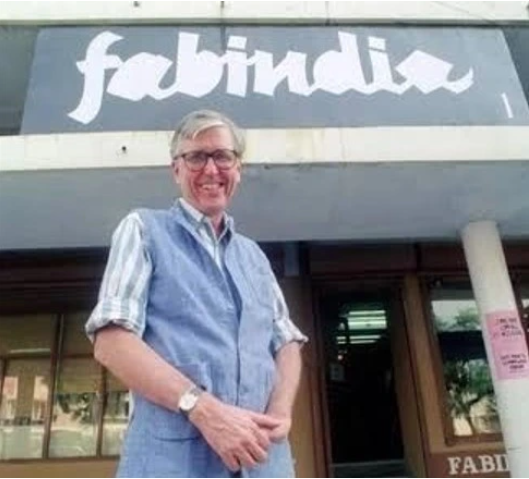
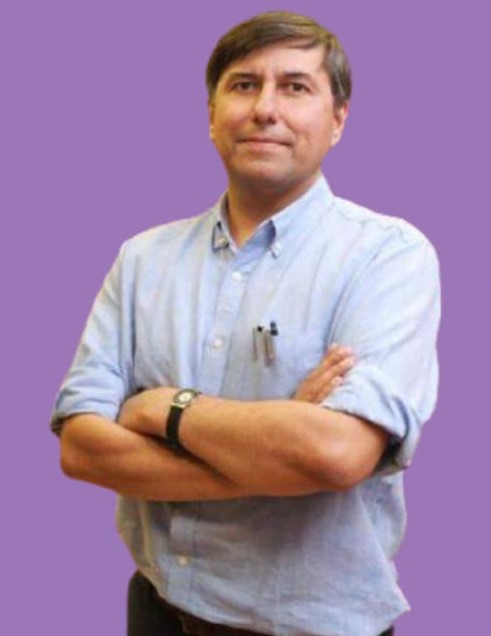
John Bissel: First Picture is of the Founder of FabIndia, & in the Second Picture There Is William Bissel, Current Chairman of FabIndia
So, when the grant ended, Bissell chose not to return home. Instead, he stayed on in India, laying the foundation for FabIndia Ltd in 1960. In 1993, John suffered from a heart attack, which drove his son William Bissell to take over the management of FabIndia. John Bissell passed away in 1998.
William Bissell was the Managing Director of the brand until the year 2018. He later became the chairman of FabIndia. Viney Singh is the CEO of FabIndia. The company has over 2000 employees and 55000 rural workers.
Today, FabIndia operates hundreds of stores across India and abroad, including Experience Centers that blend shopping with dining and wellness. It stands as a testament to how a brand can honor its roots while embracing innovation, crafting a retail experience that’s as soulful as it is modern.
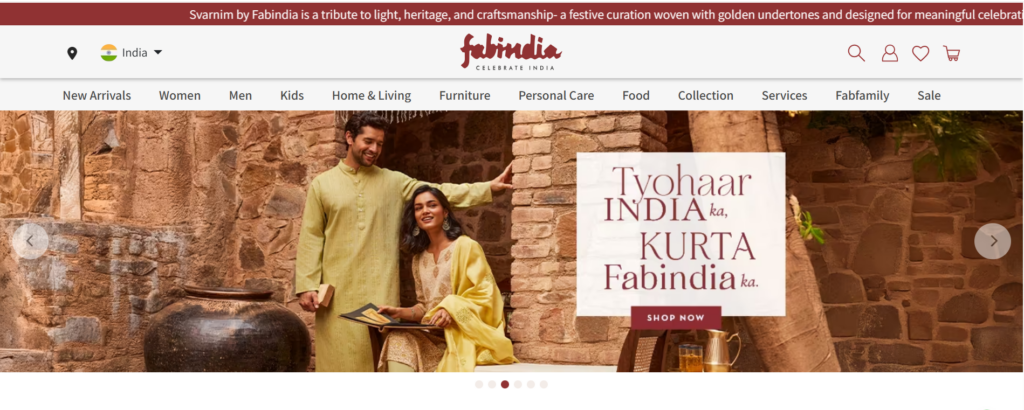
Fabindia Website
Founded in 1960, FabIndia began as an export house for Indian textiles. Over the decades, it evolved into a major retail giant with over 300 stores across India and abroad. But the real pivot came post-2015, when FabIndia began investing heavily in digital infrastructure to support a D2C growth strategy in India.
FabIndia’s D2C model was not just about launching an online store—it was about reimagining how Indian retail could integrate heritage with high-tech.

FabIndia Products
An integrated eCommerce-CRM framework connects the front-end shopping experience with back-end customer relationship management. For FabIndia, this meant syncing:
This integration allowed FabIndia to unify its customer data, streamline operations, and deliver consistent experiences across touchpoints.
With consumers increasingly accustomed to multi-channel shopping experiences, their expectations regarding convenience, personalization, and instant product availability are evolving. A survey reported that omnichannel leaders enjoy 30% higher customer retention rates compared to a single channel. The evolving reality necessitates a revised approach by D2C brands in response to the changing needs of their target audience.
FabIndia’s digital transformation was a multi-pronged strategy that blended heritage retail with cutting-edge technology. Here are the specific strategies they used to scale their D2C business and modernize operations:
FabIndia migrated to Oracle Commerce Cloud to overcome scalability and performance issues on its previous platform. This move enabled:
They developed a custom ERP system (FABCONNECT) that synced with their CRM and eCommerce platforms. This allowed:
FabIndia’s “FabFamily” loyalty program became a central pillar of their CRM:
They reimagined physical stores as Experience Centers, blending:
FabIndia used market analysis and customer segmentation to:
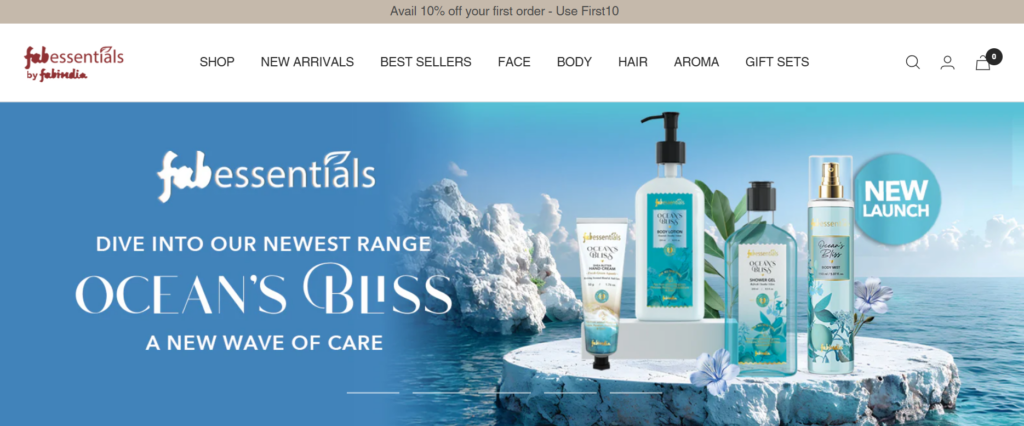
Their transformation wasn’t just digital; it was ethical:
By simplifying their tech stack and embracing cloud-native solutions, FabIndia:
These strategies helped FabIndia not only survive the digital shift but thrive in it.
By aligning its marketing efforts strategically, FabIndia ensures that it stays fully connected with its target audience and increases its brand visibility in the region.
FabIndia is India’s rapidly growing fashion and lifestyle brand, renowned for its high-quality, handmade products, including apparel, household furnishings, and accessories. It is a homegrown fashion label that has lost its soul as it has grown exponentially, with sales revenue increasing by 34% last year.
FabIndia’s product offerings include:

Diverse product offerings of FabIndia
Many brands operate in the apparel segment, but FabIndia is a conservative brand that applies a product line pricing strategy for each item. A base price is set for the high and price-sensitive consumer segment, and higher-quality products are priced accordingly.
While FabIndia follows a competitive pricing strategy, it applies product line pricing to its apparel and home-furnishing segment products. This helps the company increase its sales margin, as the higher-end products are priced higher and price-sensitive products are priced lower.
FabIndia employs a value pricing strategy and occasionally opens new stores. It encourages entrepreneurs to make good-quality, trending products. It sells handmade and glass items, and retails its products in India and abroad. It sells its products in the retail outlets, department stores, as well as chain stores. The company operates a complete chain of retail stores called FabLab.
FabIndia exports its products, limited to garments and home linens, to over 33 countries. Exports are conducted through both wholesale and retail channels. The company had opened its first-ever retail store in New Delhi in 1976 and has expanded its retail channel to 211 stores across India.
E-commerce has significantly transformed the way customers and businesses interact with one another. Customers can now shop for items online, and companies can deliver their products within hours or even a few minutes. FabIndia, a retail company in India, is a fantastic example of a company that has adopted this new technology.
The company also offers a range of products for sale online through its website. FabIndia sells its products to other retailers through modern retailers like Amazon and Flipkart.
FabIndia, an Indian company that manufactures apparel as well as accessories, is a successful example of thinking outside the box.
FabIndia’s institutional framework is a very unique one. It is accountable for the upkeep of the dying industry of ethnic handmade clothing. It provides employment opportunities to 4,000 craftspeople in rural India.
The company takes pride in manufacturing and marketing some of the safest organic home care products and personal care items. The company also takes pride in producing and selling some of the safest organic home care products and personal care items.
Social media sites are extremely popular today, so businesses primarily use these platforms to promote their businesses. In the case of FabIndia, they’ve used social media to promote themselves and, in turn, have acquired so many customers on their platform.
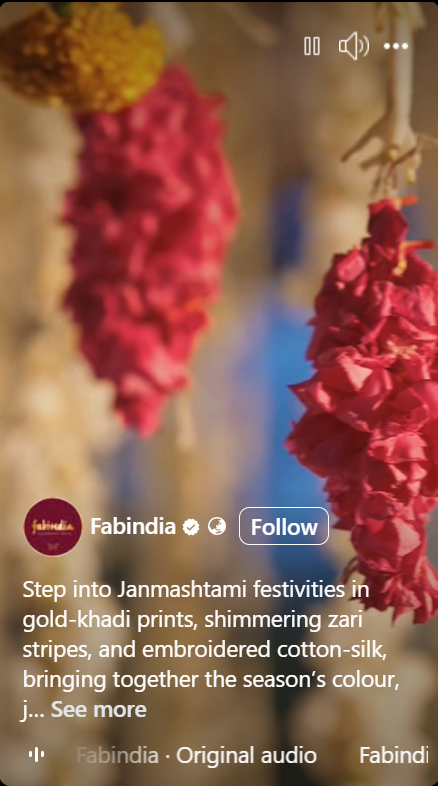
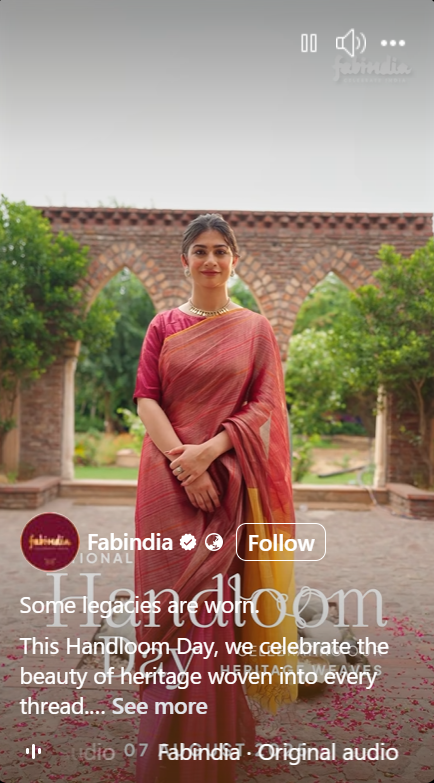
FabIndia on Facebook
FabIndia’s CRM strategy focused on nurturing long-term relationships. Their loyalty program, FabFamily, became a cornerstone of this effort.
By integrating CRM with eCommerce, FabIndia could track customer behavior across channels and tailor experiences accordingly.
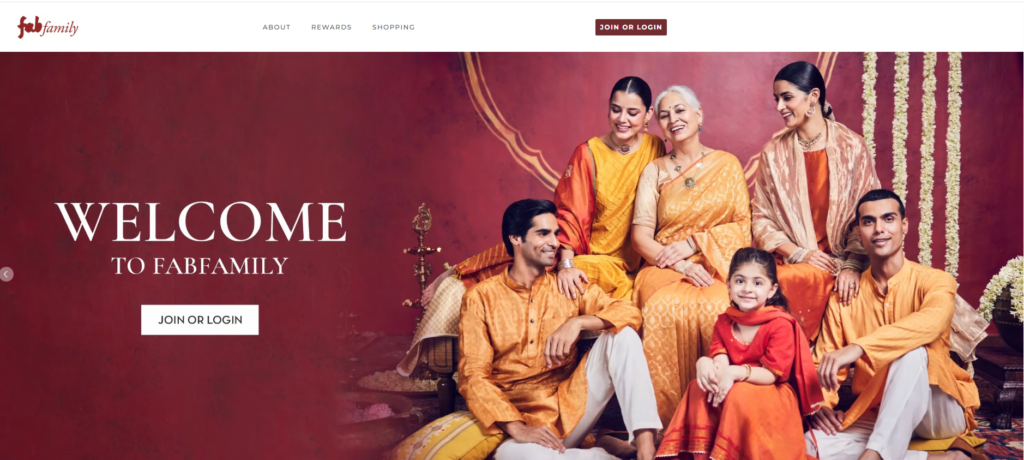
FabIndia’s Loyalty Program
The Challenge
FabIndia’s CRM strategy focused on nurturing long-term relationships. Their loyalty program, FabFamily, became a cornerstone of this effort.
By integrating CRM with eCommerce, FabIndia could track customer behavior across channels and tailor experiences accordingly.
The Challenge
Managing inventory across more than 300 stores, warehouses, and online channels is no small feat. FabIndia needed real-time visibility and control.
FabIndia deployed a custom ERP system called FABCONNECT, which integrates:
This ERP-CRM sync is enabled:
Experience Centers and FabCafes
FabIndia’s omnichannel retail strategy goes beyond eCommerce. Their Experience Centers combine:
This holistic approach fosters brand loyalty and drives foot traffic.
Tech-Enabled Touchpoints
FabIndia’s omnichannel UX ensures that whether a customer shops online or offline, the experience is consistent and delightful.
Key Metrics
Strategic Wins

FabNU- FabIndia’s sub-brand
India’s D2C market crossed $80 billion in 2024 and is projected to exceed $100 billion in 2025. FabIndia’s success is emblematic of this shift. But what exactly is D2C?
D2C, or Direct-to-Customer, is a business model where companies sell their products directly to customers, without relying on third-party retailers, distributors, or online marketplaces.
In a typical Direct-to-Consumer business:
This control over customer touchpoints is what enables these brands to be more agile, responsive, and consumer-centric.
In today’s rapidly evolving retail landscape, adopting an omnichannel strategy is crucial for businesses seeking to enhance customer experiences and boost revenue.
An omnichannel strategy allows D2C brands to offer a richer and more personalized shopping experience. Data can be collected from multiple channels to gain a better understanding of consumer preferences, ensuring that marketing is properly customized and tailored to meet those needs. This creates not only more satisfied customers but also those with loyalty and repeat purchasing intentions.
Integrating physical retail with e-commerce provides more sales opportunities. The customer may discover a product online and decide to buy it in-store, or vice versa. This multi-touch point approach ensures that brands capture sales at all stages of the customer journey, thereby increasing overall revenue.
Omni-channel strategies help manage stock better. The real-time transfer of data between the internet and offline channels helps optimize a brand’s stock level in real-time, thereby avoiding overstocking or running out of stock. It empowers D2C businesses to react to consumers, which improves operational efficiency.
A well-executed omnichannel strategy can significantly enhance brand awareness. If an online platform fails to resonate with new markets, building a D2C platform in retail locations can be highly effective.
Also Read: Explore custom ERP and CRM solutions at Shyam Future Tech.
If FabIndia’s journey inspires you to digitally transform your retail business, it’s time to take action. Whether you’re a startup or a legacy brand, the right tech partner can make all the difference.
FabIndia’s digital transformation is a masterclass in how heritage brands can seamlessly integrate modernity without compromising their soul. By integrating eCommerce with CRM and ERP, they’ve built a resilient, scalable, and customer-centric retail model.
As Indian retail continues to evolve, FabIndia stands as a beacon for brands looking to blend authenticity with innovation. The future is handcrafted—and digitally powered.
Shyam FutureTech specializes in building tailored systems that sync your eCommerce, CRM, and ERP just like FabIndia did. From mobile apps to AI-powered dashboards, we’ve got the tools to scale your business. Visit https://shyamfuture.com/ today!


 August 19, 2025
 October 18, 2018
 October 27, 2018
 November 9, 2018
 December 12, 2018
 January 12, 2019
