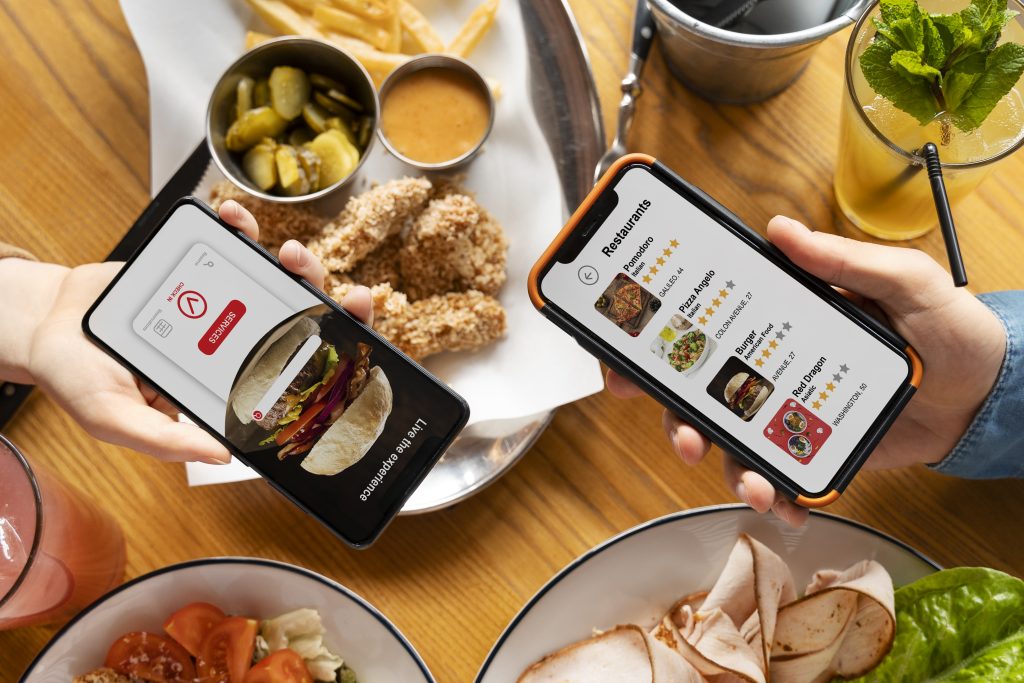
The demand for food delivery apps is rising. Digital orders and deliveries have grown 300% faster than traditional dine-in sales since 2014. According to Statista, the ‘platform-to-consumer’ delivery segment is expected to reach US$96.8 million worldwide by 2024. Considering the consequences of COVID-19, this growth will remain steady for the foreseeable future. This makes it a prolific market for food delivery app development companies in the USA.
Another good way to attract customers and build a large restaurant base is by lowering fees. Third-party delivery services like Uber Eats, DoorDash, and Seamless are prohibitively expensive, with charges up to 30% per order. These fees are a heavy financial burden on venues struggling to overcome the challenges brought about by the pandemic.
A suitable business model is vital in developing food delivery apps as it directly impacts the product or market fit and determines whether the solution will beat the competition. The emergence of ghost kitchens has recently reinvented the food delivery industry and offers a unique business model option for businesses to consider.
If you fly too high, go for an aggregator, and fail to attract restaurants on board, your app will find it difficult to catch on. Be mindful of your capacities and opportunities, and start small, as you can continually expand later.
Every food delivery app consists of an admin panel, a restaurant side, a customer side, and a delivery service provider. The order and delivery model usually collaborates with a third-party delivery service to ensure the food reaches the customer. The delivery provider can also set their fees.
The integrated business model allows for external delivery services and restaurant couriers. Many restaurants provide courier services or hire a few delivery agents to help them. This type of app will enable restaurants to select between using the app’s provided delivery services or delivering the food themselves.
The inventory business model is another alternative to Uber Eats-like applications that connects customers to only one business. The platform admin of the app manages and controls the complete value chain, from operating the app and preparing the orders to completing the deliveries. This type of food delivery app does not allow several vendors to offer their services but only focuses on primary restaurants like McDonald’s, Domino’s, and other large restaurant chains.
The first step you must take when creating a food delivery app is to conduct thorough market research. Here, you should seek advice from your peers, discover their strengths and weaknesses, and devise strategies to counter them. It helps to create a brilliant food delivery app quickly and effectively.
These apps come in various models; restaurant owners own some, while others serve as contact channels for eateries and restaurants. Determine which business model suits your operations the best before you start anything and work in that direction.
You must list every single feature, functionality, and API for your app. It will be easy for you once you know the answers to these questions.
The single thing left is to execute your app once you have decided on its specifications. You will also need a skilled app development company to help you develop the app.
The general phases of the app development process are:
Depending on your specifications, the development company you’ve chosen will create the app’s user flow logic and screens.
The interfaces of your app and the integration of all its functionalities are the focus of the user interface and experience design phases.
The developers put everything together and built the actual app during this phase. Choose the right technology stack for the food delivery app.
Only after you have decided on the different functionalities, you want your app to have can you select a technology stack for its development. As a result, once you are aware of the features and functionalities you want, choosing the right tech stack becomes simple.
Once the food delivery app is developed, it needs to be appropriately evaluated and tested to check if it functions flawlessly and if its functionality is fault-tolerant.
Estimating your food delivery app’s development cost is only possible by completing the process. The development company you have chosen is one of many variables affecting an app’s price.
The app’s complexity is another factor that impacts how much it will cost to develop an app. The cost of developing your on-demand food delivery app will increase directly to how sophisticated you want it to be.
As with mobile restaurant app development costs, calculating the price of a food delivery app involves the following:
So, the final cost ranges from $US30,000 to $US500,000 depending on the complexity of your project.
A well-performing, beautifully designed app is paramount when starting a food delivery business. The most effective way to develop such software is to hire an experienced software development company like Shyam Future Tech. By working with us, you can expect a high-quality final product and a reliable partner ready to share experience and advice.

 August 19, 2025
 October 18, 2018
 October 27, 2018
 November 9, 2018
 December 12, 2018
 January 12, 2019
