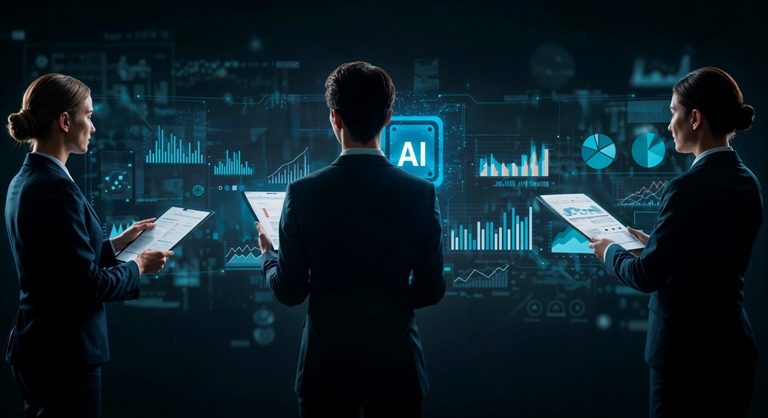
The digital marketing landscape in 2025 is unrecognizable compared to just a few years ago. With the rise of AI in Digital Marketing 2025, voice search, and marketing automation, brands are now operating in a hyper-personalized, data-driven ecosystem. These innovations are not just enhancing marketing, they’re transforming it.
Consumers expect instant, relevant, and intuitive experiences. Marketers must now leverage intelligent tools to meet these expectations while navigating privacy regulations, platform changes, and fierce competition.
This article examines how these technologies are transforming the future of SEO and digital marketing, and what businesses must do to remain competitive.
Artificial Intelligence (AI) has undergone a very dramatic transformation from a futuristic buzzword to an indispensable pillar of digital marketing. In 2025, AI is no longer a niche tool used by tech-savvy marketers; it has become a foundational element embedded in nearly every aspect of digital strategy. Here’s how it’s reshaping the landscape:
AI enables marketers to deliver highly personalized experiences to millions of users simultaneously. By analyzing behavioral data, purchase history, and engagement patterns, AI systems craft tailored messages, product recommendations, and content journeys that resonate with individual users.
• Example: E-commerce platforms use AI to suggest products based on browsing behavior, seasonal trends, and even mood inferred from interaction patterns.
Marketers now rely on AI to anticipate customer needs before they arise. Predictive models analyze the historical data to forecast future actions such as churn risk, buying intent, or content preferences, allowing brands to proactively engage users.
• Example: Subscription services use AI to identify users likely to cancel and trigger retention campaigns before they do.
AI-powered tools generate blog posts, ad copy, social media captions, and even video scripts. While human oversight ensures quality and tone, AI handles the heavy lifting, saving time and enabling rapid scaling.
• Example: AI tools like Jasper and Copy.ai produce SEO-optimized articles in minutes, tailored to specific keywords and audience segments.
AI continuously monitors ad performance across platforms and adjusts targeting, bidding, and creative elements in real time. This dynamic optimization maximizes ROI and ensures campaigns stay relevant.
• Example: Programmatic advertising platforms utilize AI to automatically serve the right ad to the right person at the right time.
AI-driven chatbots and virtual assistants handle customer inquiries, guide users through sales funnels, and provide 24/7 support. These bots are now context-aware, emotionally intelligent, and capable of complex interactions.
• Example: Travel websites use AI chatbots to recommend destinations, book flights, and up-sell travel insurance all in one seamless conversation.
With the rise of voice-activated devices, AI’s ability to understand and also respond to natural language is critical. Marketers optimize content for voice search, and AI ensures that responses are accurate, conversational, and contextually relevant.
• Example: Local businesses optimize for “near me” voice queries, and AI ensures their listings appear with relevant answers.
AI tools analyze visual content to identify trends, suggest design improvements, and even generate graphics. This empowers marketers to create visually compelling campaigns without needing a full design team.
• Example: AI platforms like Canva’s Magic Design suggest layouts and color schemes based on brand assets and campaign goals.
AI scans social media, reviews, and forums to gauge public sentiment about brands, products, and campaigns. This real-time feedback loop enables marketers to adjust their messaging and strategy instantly.
• Example: Brands monitor Twitter sentiment during product launches and tweak messaging based on audience reactions.
Search engines increasingly prioritize user intent and experience. AI helps marketers optimize content for semantic search, featured snippets, and voice queries, ensuring visibility in a crowded digital space.
• Example: AI tools analyze competitor content, identify keyword gaps, and suggest improvements to boost rankings.
With growing concerns about data privacy, AI systems are now incorporating ethical frameworks and compliance protocols. Marketers use AI to manage consent, anonymize data, and ensure transparency.
• Example: AI-driven consent management platforms enable brands to comply with GDPR, CCPA, and other emerging global regulations.
In 2025, AI is not just a tool, it’s the strategic brain behind every successful digital marketing initiative. It empowers marketers to be faster, smarter, and more customer-centric than ever before.
1. Predictive Analytics: AI models analyze user behavior to forecast future actions, enabling smarter targeting and content delivery.
2. Content Generation: Tools like ChatGPT and Jasper enable the creation of blog posts, ad copy, and product descriptions at scale.
3. Customer Segmentation: AI clusters audiences based on their behavior, demographics, and psychographics to deliver precise messaging.
4. Dynamic Pricing and Offers: Real-time adjustments based on demand, competition, and user profiles.
5. AI-Powered SEO: Algorithms optimize content for search engines by analyzing trends, keywords, and user intent.
• Efficiency: Automates repetitive tasks, freeing up human creativity.
• Personalization: Delivers tailored experiences that boost engagement and conversions.
• Scalability: Handles large datasets and campaigns across multiple platforms.
AI is no longer optional; it’s a competitive necessity.
Voice search is hugely transforming how users interact with digital content. With innovative and smart assistants like Alexa, Siri, and Google Assistant becoming ubiquitous, voice queries now account for a significant portion of the search traffic.

• Conversational Keywords: Traditional keywords are being replaced by natural language queries.
• Featured Snippets: Voice assistants often pull answers from snippets, making them prime SEO real estate.
• Local Search Optimization: “Near me” searches dominate voice queries, requiring hyper-local SEO strategies.
• Mobile and Wearable Integration: Voice search is deeply tied to mobile and wearable devices, influencing design and UX.
• Focus on the long-tail keywords and content that addresses questions.
• Optimize for structured data and schema markup.
• Ensure fast-loading, mobile-friendly websites.
Voice search demands a shift from keyword stuffing to meaningful, conversational content.
Automation is the engine behind modern marketing operations. In 2025, it’s smarter, faster, and more integrated than ever.
• Omni-channel Automation: Unified messaging across email, SMS, social media, and web platforms.
• AI-Driven Workflows: Automation tools now use machine learning to adapt workflows based on performance.
• Real-Time Personalization: Dynamic content changes based on user behavior and context.
• Lead Scoring and Nurturing: Automated systems qualify leads and deliver tailored nurturing sequences.
• Chatbots and Virtual Assistants: AI-powered bots handle customer service, sales, and onboarding.
• HubSpot
• Salesforce Marketing Cloud
• ActiveCampaign
• Marketo
• Zoho Marketing Automation
These platforms are integrating AI to offer predictive insights, automated testing, and seamless CRM integration.
SEO in 2025 is no longer about backlinks and keyword density—it’s about intent, experience, and trust.

• E-E-A-T (Experience, Expertise, Authoritativeness, and Trustworthiness): Google’s evolving algorithm favors credible, user-focused content.
• Core Web Vitals: Page speed, interactivity, and visual stability are critical ranking factors.
• Semantic Search: Understanding context and meaning behind queries.
• Zero-Click Searches: Optimizing for answers that appear directly on the SERP.
• AI-Generated Content: Requires human oversight to ensure quality and authenticity.
• Privacy-First Marketing: With regulations such as GDPR and CCPA, marketers must prioritize obtaining consent and maintaining transparency.
• Cookie-less Future: First-party data and contextual targeting are replacing third-party cookies.
• Interactive Content: Quizzes, polls, and AR experiences drive engagement.
• Video Dominance: Short-form and live video continue to outperform static content.
Marketers must blend creativity with technology to thrive in this new landscape.
Despite the rise of AI, human creativity remains irreplaceable. The most successful marketers in the year 2025 are those who combine machine intelligence with emotional intelligence.
• Strategy and Vision
• Creative Direction
• Ethical Oversight
• Relationship Building
AI handles the “how,” but humans define the “why.”
As businesses navigate this complex terrain, Shyam Future Tech offers cutting-edge solutions tailored to the demands of 2025. Their services include:
• AI-powered marketing platforms
• Voice search optimization
• Automation strategy consulting
• Custom CRM and ERP integrations
With a focus on innovation and scalability, Shyam Future Tech empowers brands to future-proof their digital presence.
As AI in digital marketing becomes the norm rather than the exception in 2025, the pressure on digital marketers and agencies to evolve is more intense than ever. The surging demand for AI-powered solutions has created a dynamic landscape where yesterday’s strategies quickly become obsolete. In this environment, continuous learning is not a luxury; it’s a survival skill.
AI tools are evolving at an unprecedented rate. From generative content platforms to predictive analytics engines, new capabilities emerge monthly. Marketers must stay updated to leverage these tools effectively and avoid falling behind competitors who do.
Artificial Intelligence is transforming the way consumers interact with brands through voice search, chatbots, and hyper-personalized experiences. Understanding these shifts requires ongoing education in behavioral science, UX design, and data interpretation.
Search engines, social media platforms, and the ad networks frequently update their algorithms to prioritize AI-driven engagement metrics. Marketers who fail to adapt risk losing visibility, reach, and ROI.
With the advent of AI comes increased scrutiny of data usage. Marketers must continually learn about evolving regulations, such as GDPR, CCPA, and India’s DPDP Act, to ensure compliance and maintain consumer trust.
AI intersects with disciplines like machine learning, data science, and automation engineering. Marketers who embrace cross-functional learning can collaborate more effectively and drive innovation.
• Invest in Training Programs: Encourage teams to pursue certifications in AI, automation, and digital strategy.
• Attend Industry Events: Conferences, webinars, and workshops offer exposure to cutting-edge tools and thought leadership.
• Follow Thought Leaders: Stay informed through blogs, podcasts, and newsletters from AI and marketing experts.
• Experiment and Iterate: Create sandbox environments to test new tools and strategies without risking live campaigns.
• Encourage Peer Learning: Foster internal knowledge-sharing through lunch-and-learns, mentorship, and collaborative projects.
Companies that prioritize learning are more agile, innovative, and resilient. They attract top talent, adapt faster to market changes, and deliver superior customer experiences. In contrast, those who resist change risk stagnation and irrelevance.
Bottom Line: In the age of marketing automation trends 2025, continuous learning is the fuel that powers growth, creativity, and competitive edge. It’s not just about keeping up, it’s about leading the charge.
To stay competitive, marketers must:
• Invest in AI tools for analytics, content, and personalization.
• Optimize for voice search with conversational content and local SEO.
• Automate workflows across channels for efficiency and consistency.
• Prioritize user experience and mobile performance.
• Embrace ethical marketing and data transparency.
The convergence of AI in Digital Marketing 2025, voice search, and marketing automation trends 2025 marks a turning point in how different brands connect with audiences. These technologies are not just tools; they’re catalysts for transformation.
Marketers who embrace this evolution will unlock new levels of engagement, efficiency, and growth. Those who resist will struggle to stay relevant. The future is here. It’s intelligent, automated, and voice-activated.
Explore how Shyam Future Tech can elevate your marketing strategy. Visit shyamfuture.com today.

 August 19, 2025
 October 18, 2018
 October 27, 2018
 November 9, 2018
 December 12, 2018
 January 12, 2019
